
Most people don’t think much about their household water until something feels off. Maybe the morning coffee tastes different. Perhaps the shower leaves a strange residue on the skin, or the kitchen faucet develops a crusty white ring that seems to return no matter how often it’s cleaned. These aren’t necessarily dramatic problems, but they’re enough to make you wonder what’s really happening inside the pipes.
The good news is that improving household water quality doesn’t have to mean turning your home into a laboratory. The first step is simply understanding your water and deciding what you want to improve. From there, the right equipment can make a noticeable difference in comfort, appliance protection, and everyday convenience.
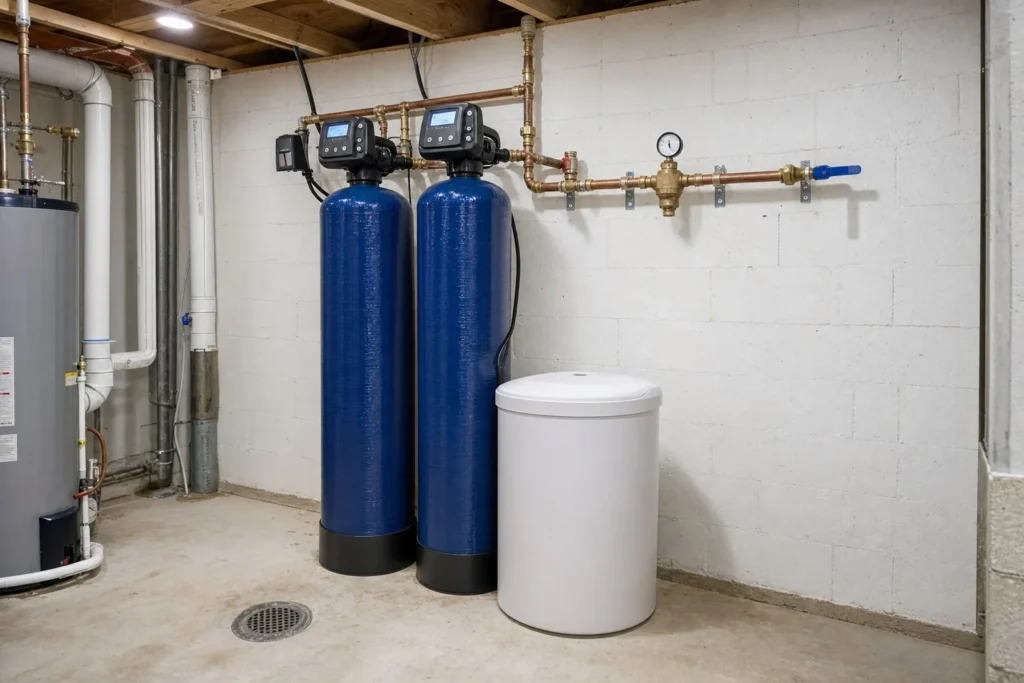
For many homeowners, home water treatment solutions provide a practical way to address specific concerns rather than relying on a one-size-fits-all system. The best setup depends on the source of the water, household usage, plumbing, and the issues identified through testing.
Start With a Water Test
Before buying a filter, softener, or purification unit, test the water. It sounds obvious, yet it’s a step people often skip.
Water can contain characteristics that aren’t visible, noticeable by smell, or obvious from taste. A professional analysis can provide information about hardness, pH, dissolved minerals, sediment, and other water-quality factors.
If your home uses well water, regular testing becomes even more useful because groundwater conditions can change. Municipal water supplies are treated before distribution, but the water reaching an individual home can still be affected by local plumbing or other factors.
Testing gives you a baseline. Instead of thinking, “I probably need a filter,” you can ask a much better question: “What does my water actually need?”
Understanding Hard Water
Hard water is one of the most common reasons homeowners explore treatment. It contains higher levels of naturally occurring minerals, mainly calcium and magnesium.
You may notice hard water through white deposits around faucets, spots on dishes, or scale inside showerheads. Soap can also behave differently, sometimes leaving behind a film that makes bathrooms seem harder to keep clean.
The bigger concern is often what you can’t see. Mineral scale can build up inside pipes, water heaters, and appliances. Over time, that buildup may affect efficiency and maintenance requirements.
A water softener is designed specifically to address hardness. It isn’t a general-purpose purifier, though, and that distinction is worth remembering when comparing treatment options.
What Water Filtration Actually Does
The word “filtration” covers a surprisingly wide range of technologies. Different filters are designed to target different things.
Sediment filters can capture physical particles such as dirt, sand, and rust. Activated carbon filters are commonly used to reduce chlorine and improve taste and odor. Other filtration media are designed for more specific water-quality concerns.
This is why water filtration should be selected according to the water problem rather than simply the number of stages advertised on a product.
More stages aren’t automatically better. If your water doesn’t contain a substance that a particular filter is designed to remove, adding that stage may provide little practical benefit while increasing cost and maintenance.
When Purification Makes Sense
Filtration and purification aren’t interchangeable terms. Purification generally refers to more extensive treatment designed to reduce a broader range of contaminants or provide a higher level of water treatment.
Reverse osmosis is one example. It uses a semipermeable membrane and can reduce many dissolved substances from drinking water. Ultraviolet treatment is another technology that may be used in certain applications to address microorganisms.
The right choice depends on the source water and the intended use. Drinking water may require a different treatment approach from water used for laundry, bathing, or outdoor activities.
In other words, don’t treat every gallon of water in the house as though it has identical requirements.
Whole-House or Point-of-Use?
This is another decision homeowners often face. A whole-house system treats water as it enters the property, providing treated water throughout the plumbing network. A point-of-use system, meanwhile, focuses on a particular faucet or appliance.
Whole-house treatment can make sense when the concern affects bathing, laundry, appliances, and other household uses. Point-of-use equipment can be more practical when the primary goal is improving drinking and cooking water.
Neither approach is automatically right for every home. The answer depends on what you’re trying to accomplish and how much water requires treatment.
Think About Household Demand
A treatment system needs to keep up with real-life usage. A home with two residents and two bathrooms has very different water demands from a busy household with several children and frequent guests.
Sizing matters because an undersized system may struggle during periods of high demand. An oversized system, meanwhile, can cost more than necessary.
Consider peak usage, not just average consumption. Morning showers, laundry, dishwashing, and other activities can happen at the same time. A good installer should consider these patterns before recommending equipment.
It’s a small detail that can make a big difference later.
Maintenance Isn’t Optional
Water treatment equipment isn’t completely “set it and forget it.” Filters need replacement, softeners require appropriate maintenance, and other systems may need periodic inspection.
Neglecting maintenance can reduce performance and, in some cases, create additional problems. A filter that’s well past its service life shouldn’t be expected to perform like a new one.
Keep track of replacement dates and service appointments. Also pay attention to changes in water pressure, taste, odor, or appearance. Your water often gives you clues when something isn’t working properly.
Look at the Long-Term Cost
Price matters, but the sticker price isn’t the whole story.
When comparing treatment equipment, consider installation, replacement filters, salt or other consumables, electricity, servicing, and expected lifespan. A less expensive unit may not remain inexpensive if it requires frequent maintenance or costly replacement components.
Warranty coverage is worth checking too. Understand what’s included, how long coverage lasts, and who handles service if something goes wrong.
A reputable professional should be able to explain these details without making the conversation feel like a sales pitch.
A Better Approach to Water at Home
The best water treatment decisions usually begin with a simple process: test the water, identify the problem, choose technology that addresses that problem, size the equipment correctly, and maintain it.
For some homes, a basic sediment or carbon filter may be enough. Others may benefit from a softener, reverse osmosis, or a combination of treatment methods.
The important thing is not to chase the most complicated setup. It’s to build a system that makes sense for your water and your household.
Modern softening, and purification systems can be remarkably effective when they’re selected thoughtfully and maintained properly. But technology alone isn’t the answer. Good information comes first.
Water is something we use constantly without giving it much thought. That’s exactly why getting it right matters. When your treatment system is properly matched to your home, the benefits are wonderfully ordinary — better-tasting water, fewer mineral deposits, protected appliances, and one less household problem competing for your attention.
And honestly, that’s what good water treatment should do. Work quietly, reliably, and without making everyday life more complicated than it needs to be.