
There’s something frustrating about living with water that never quite feels right. You wash your hands, and your skin feels dry. You clean the shower, only to notice cloudy spots returning a few days later. Even the kettle or coffee maker seems to collect a stubborn layer that wasn’t there before.
These are common signs of hard water, and they can become more than a minor household annoyance over time. Fortunately, the right water treatment approach can make a noticeable difference. For homeowners researching water softening systems in northeast florida, understanding how hard water works and what a softener actually does is a good place to start.
What Makes Water “Hard”?
Hard water contains elevated levels of naturally occurring minerals, mainly calcium and magnesium. These minerals aren’t necessarily harmful to drink, but they can create plenty of practical problems around the house.
As water travels through soil and rock, it can pick up minerals along the way. By the time that water reaches your home, it may carry enough calcium and magnesium to affect plumbing, appliances, laundry, dishes, and even the way soap behaves.
That’s why two homes in nearby areas can sometimes have noticeably different water quality. The mineral content depends on the local water source and geology.
The Everyday Trouble Caused by Mineral-Rich Water
One of the biggest complaints homeowners have is hard water scale & buildup. That white, chalky residue around faucets, showerheads, sinks, and appliances isn’t just ugly. If left alone, mineral deposits can gradually become harder to remove.
Inside plumbing fixtures, scale may restrict water flow. In appliances that heat water, mineral deposits can accumulate on heating elements and reduce efficiency. Nobody enjoys scrubbing a shower door every weekend, either.
Then there’s laundry. Hard water can make it more difficult for detergents to work effectively, leaving clothes feeling less soft and looking a little dull. Towels are especially good at exposing the problem — they can come out of the washer clean but strangely stiff.
How Water Softeners Actually Work
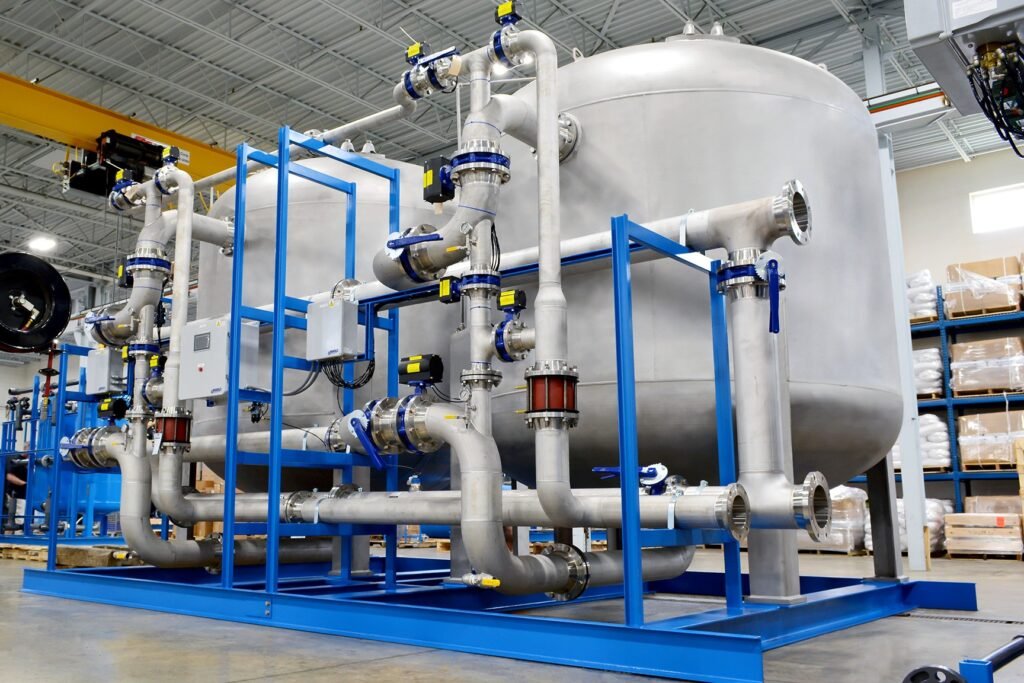
Traditional water softeners are designed to reduce the concentration of calcium and magnesium in household water. Most conventional systems use a process called ion exchange.
In simple terms, the softener contains resin beads that attract hardness minerals. As hard water passes through the resin, calcium and magnesium ions are exchanged for sodium or, in some systems, potassium ions.
Eventually, the resin becomes loaded with minerals and needs to be regenerated. During regeneration, the system uses a salt solution to clean the resin and prepare it for another cycle.
It sounds technical, but the homeowner experience is generally pretty simple: install the appropriate system, keep up with routine maintenance, and let it quietly do its job.
Signs Your Home May Need Water Treatment
Not sure whether hard water is actually affecting your home? Look around.
White spots on glassware are an obvious clue. So are crusty showerheads, mineral rings around sinks, and faucets that seem to develop deposits almost overnight.
You may also notice soap scum building up quickly or find that shampoo and soap don’t seem to rinse away as easily as expected.
Another clue is the condition of your water-using appliances. Water heaters, dishwashers, washing machines, and coffee makers can all be affected by mineral deposits. A problem that starts as a cosmetic issue can eventually turn into an equipment-maintenance headache.
Choosing the Right System for Your Home
There isn’t one perfect softener for every household. Water usage, household size, existing plumbing, water hardness, and available installation space all matter.
A larger family, for example, may require a system with greater capacity than a small household. If water usage is unusually high, choosing a system that is too small can lead to frequent regeneration and less convenient operation.
It’s also worth considering the system’s control method, regeneration efficiency, maintenance requirements, and warranty. The cheapest option on the shelf isn’t always the least expensive choice over several years.
A professional water-quality assessment can help determine what your water actually contains before you spend money on equipment you may not need.
Don’t Forget About Maintenance
Even a good water treatment system needs a little attention. Salt-based softeners need an adequate supply of salt, while components such as valves, resin tanks, and control systems should be checked periodically.
If you notice changes in water quality, unusual noises, salt disappearing unusually quickly, or a return of mineral spots, don’t simply ignore it. A small issue may be easier and cheaper to correct than a neglected problem.
Regular maintenance also helps the system operate more efficiently. Like most things in a home, a little care now can prevent a bigger repair later.
The Difference You May Notice Day to Day
The benefits of treating hard water aren’t always dramatic on day one. Instead, they tend to show up in small, satisfying ways.
Glasses may come out of the dishwasher with fewer spots. Faucets can stay cleaner for longer. Soap may lather more easily. Clothes and towels may feel different after washing.
There can also be a long-term benefit for water-using equipment because reducing mineral accumulation may help limit scale-related problems. That doesn’t mean a softener makes appliances maintenance-free, of course, but it can be one useful part of a broader home-maintenance routine.
A Smarter Way to Think About Water Quality
It’s easy to think of water treatment as something you only need when there’s an obvious problem. But water is used constantly — for drinking, cooking, bathing, washing clothes, cleaning dishes, and running appliances.
That makes water quality a surprisingly important part of everyday home comfort.
If you’re dealing with persistent mineral deposits or simply want to understand what’s coming through your taps, start with a water test. Knowing the hardness level and other characteristics of your water gives you a much clearer picture of what kind of treatment, if any, makes sense.
Ultimately, the best solution isn’t necessarily the biggest or most expensive system. It’s the one that fits your home, your water quality, and your daily routine. Good water treatment should work quietly in the background, making life a little easier without becoming another thing you have to think about every day.