
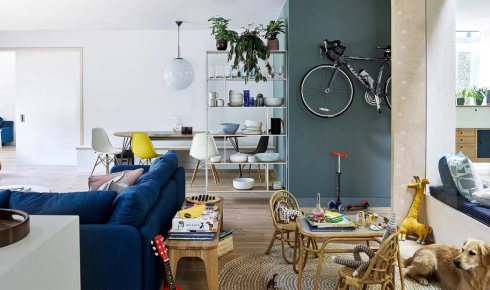
There’s a quiet kind of magic that happens in the living room. It’s the one space that sees everything—from the sleepy silence of early mornings to chaotic movie marathons with snacks everywhere. It’s a room that holds your life in snapshots, sometimes messy, sometimes serene, but always real.
But when it comes to designing this all-important space, it’s easy to get overwhelmed. You’re bombarded with Pinterest boards, color swatches, design rules, and an ocean of style options. Minimalist? Mid-century? Boho-chic with a hint of Scandinavian?
Truth is, none of those labels matter unless the room feels like you.
Let’s talk about how to design a living room that’s modern, functional, and deeply personal—with no stiffness, no perfection, just pure intention.
Begin with the Flow, Not the Furniture
Here’s where most people get stuck: they start with the couch or the wall color. But good design starts with movement. How do you walk through the room? Where do your eyes naturally go? Do you want the space to feel intimate or expansive?
This is where open concept living design really shines. Opening up your living area to connect with the kitchen or dining space instantly makes it feel bigger, brighter, and more communal. It eliminates dead corners and encourages conversation across spaces.
Still, open concepts demand smart zoning—think area rugs to define a sitting area, lighting that layers across zones, and furniture that doesn’t just float aimlessly but anchors.
Choose a Color Palette That Lets You Breathe
The color of your walls, furniture, and accents set the emotional tone of your space. Want calm? Go for soft beiges, dusty blues, or muted greens. Want energy? Try bold contrasts—charcoal walls with warm wood tones or rust-orange accents with navy.
Don’t obsess over “rules.” Color is incredibly personal. Trust what draws you in, not what’s trending.
Even within the most neutral palette, you can play with texture—linen curtains, velvet cushions, woven baskets, and raw woods. These little details layer up to create warmth, even in a cool-toned room.
Function Before Flair
Every living room has a rhythm. Maybe yours is movie nights and takeout on the couch. Or maybe it’s toddler chaos, piles of books, and impromptu dance parties. Your room should be designed for that rhythm.
That means choosing furniture and layouts that make life easier. Ottomans that double as storage. Coffee tables that aren’t glass if you’ve got kids. A sectional instead of two sofas if you love stretching out.
It’s easy to fall for the Instagram look, but if it doesn’t work in real life, it’ll feel off.
So before you buy, sit down—literally—and picture how you’ll live in this room, day to day.
Bring in the Personality
Let’s get real for a second: a stylish living room doesn’t need to be expensive or professionally styled. What it needs is a heartbeat—something personal.
Maybe it’s a thrifted lamp you scored on a road trip. Maybe it’s a painting from a local artist, or your grandmother’s throw blanket casually draped over the couch. Or maybe it’s just the way your books are stacked haphazardly on that open shelf.
These are the things that whisper, “someone lives here.” And those whispers? They’re what elevate a house into a home.
What Does Modern Really Mean?
Modern doesn’t have to mean cold. In fact, some of the most inviting homes blend sleek lines and contemporary palettes with cozy, tactile elements.
Want to explore some modern living room ideas without stripping your space of soul?
- Try a low-profile sofa in a neutral shade, then throw on oversized knit pillows.
- Use black metal frames for art, mirrors, or shelving, balanced with warm oak or cane accents.
- Mix materials: concrete and velvet, marble and wood, matte finishes with high gloss.
- Embrace negative space. Don’t fill every wall or surface—let the room breathe.
This balance of form and feeling is where modern really comes alive.
Lighting: The Vibe-Setter
Ever notice how a room can look completely different at night than it does during the day? That’s lighting—and it’s often overlooked.
Layered lighting is key. Start with overhead lights, but soften them with dimmers. Then add task lighting—like a reading lamp near the armchair—and ambient sources like floor lamps or wall sconces.
And candles? Always a good idea.
Warm lighting turns even the most minimalist living room into a place you want to curl up in after a long day.
The Power of Plants
Even if you’re not a “plant person,” try adding a few leafy friends to your living space. They add life, movement, and a hit of nature that instantly balances clean lines or structured layouts.
A tall rubber plant in the corner. A trailing pothos on a shelf. A tiny cactus by the window.
It’s not about quantity—it’s about presence.
Final Thoughts: Style That Feels Like Home
You don’t need a designer or a giant budget to create a space that feels good. You just need to tune in to what feels right. What makes you exhale when you walk in. What makes guests linger a little longer. What makes you want to stay in your pajamas just a little bit more on Sunday morning.
Let your living room reflect your life—not someone else’s curated feed. Let it be imperfect. Let it be evolving. But most of all, let it be yours.