
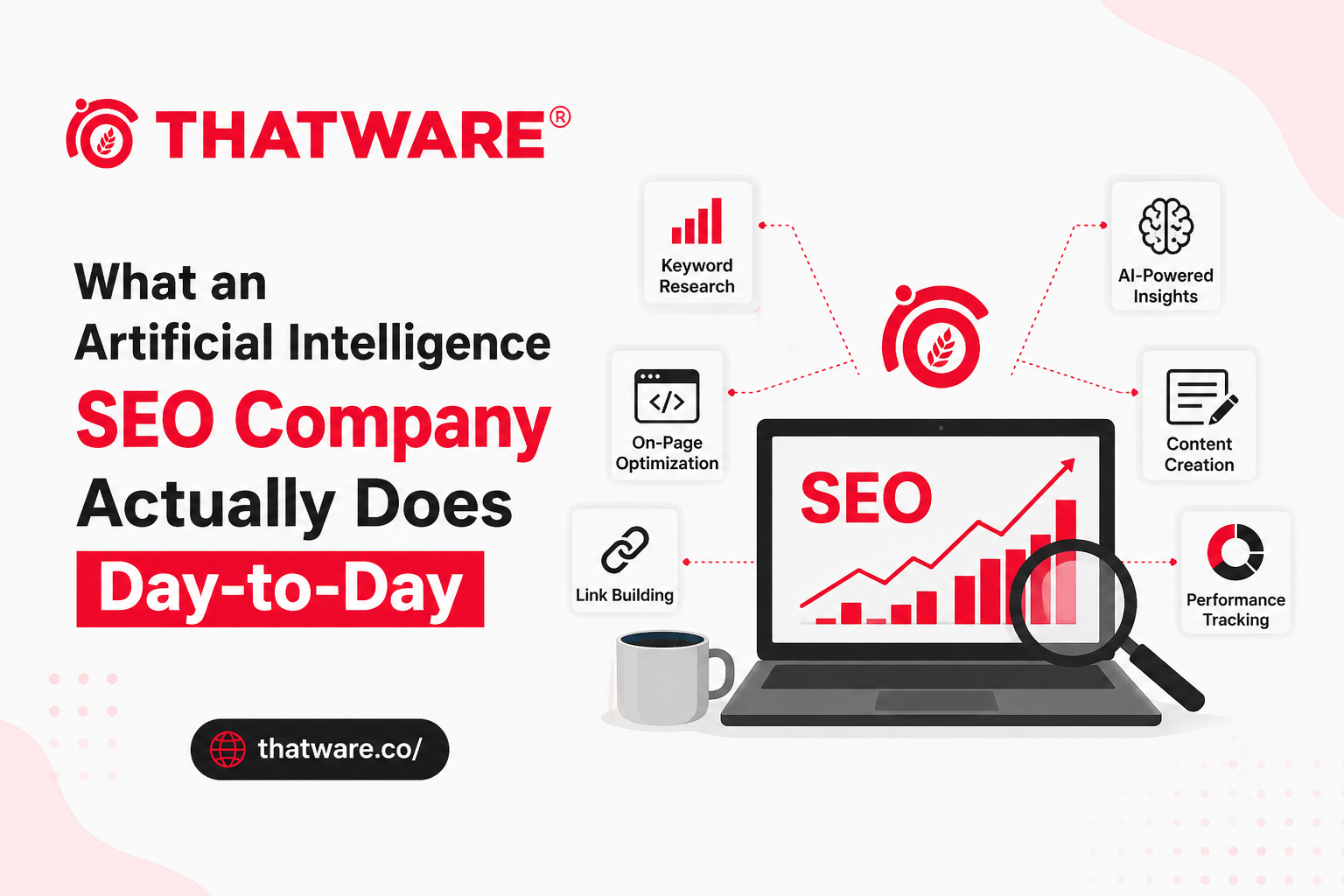
What an Artificial Intelligence SEO Company Actually Does Day-to-Day
The phrase “artificial intelligence SEO” gets applied to a pretty wide range of things, not all of them meaningfully differentiated from conventional SEO with some AI tools mixed in. If you’re evaluating agencies that call themselves AI SEO companies, it’s worth understanding what that designation should actually mean in practice — what the day-to-day work looks like, which parts of the process AI genuinely improves, and where the label is more aspiration than description.
This isn’t a theoretical question. How an AI SEO company spends its time tells you whether the AI is doing real work or providing cover for conventional execution at a premium price.
The Legitimate AI Layer: Where It Changes the Work
Start with where AI genuinely changes what’s possible in SEO work.
Competitive analysis at scale. Traditional competitive analysis involves analysts manually reviewing competitor sites, content, and backlink profiles. AI-assisted competitive analysis can process far more data, identify patterns across much larger datasets, and surface insights — content gaps, topic clusters competitors are building, authority patterns across the backlink landscape — that would take weeks to generate manually. Done well, this produces more comprehensive competitive intelligence and surfaces opportunities that manual analysis misses.
Content gap identification. Identifying where a site lacks coverage of topics its target audience is searching for requires cross-referencing keyword data, search intent clusters, competitor content maps, and the site’s existing content structure. AI tools that can process these dimensions simultaneously and identify the specific gaps worth filling are genuinely more powerful than manual methods for this task at scale.
Technical SEO pattern detection. Large sites have technical issues that aren’t detectable by looking at individual pages. AI-assisted crawl analysis can identify patterns across thousands of pages — systematic canonicalization problems, structured data implementation errors at scale, page speed regressions correlated with template changes — that would be invisible to page-by-page review.
Semantic analysis. Understanding how a domain’s content is perceived topically — what subject areas Google’s systems associate the domain with, where that association is strong or weak, how it compares to competitor topic authority — benefits from NLP-level analysis that AI tools handle well.
What Separates Genuine AI SEO From Regular SEO Relabeled
Artificial intelligence seo company claims that are genuine typically involve proprietary or heavily customized tooling — not just using the same AI platforms everyone has access to, but building systems that apply AI to specific SEO analytical tasks in ways that aren’t replicable by clients or competitors with off-the-shelf tools.
They involve human expertise in working with AI outputs. Raw AI analysis needs interpretation — someone who understands both the AI’s capabilities and limitations and the specific SEO context being analyzed. Companies that have invested in this interpretive capability produce better analysis than ones that treat AI output as a finished product.
They also involve transparency about what AI is and isn’t doing. A good AI SEO company can tell you specifically which parts of their process involve AI and which involve human judgment — and explain why the human-AI combination produces better results than either alone.
What AI SEO companies should NOT be doing: using AI to generate content at volume without meaningful human editorial oversight, claiming AI capabilities in strategic areas (like relationship building for link acquisition) where human judgment is genuinely irreplaceable, or treating AI tool access as a differentiator when the tools are widely available.
A Day in the Work: How AI Changes the Rhythm
What does this actually look like operationally? A rough picture of how AI integration changes the day-to-day rhythm of SEO work at a company doing it properly.
Morning: AI-assisted monitoring surfaces overnight changes — ranking movements, competitor content publications, new backlinks appearing in the competitive landscape, Search Console anomalies. A strategist reviews these signals and identifies what requires action versus what’s background noise.
Content work: a strategist defines the brief and intent for a content piece. AI assists with research synthesis — pulling together relevant sources, identifying key facts and claims, surfacing related questions that should be addressed. A human writer produces the actual content, drawing on the AI-synthesized research as raw material rather than using AI-generated text directly.
Technical audit: AI-assisted crawl analysis processes the site’s technical health, flagging patterns that meet predefined anomaly thresholds. A technical SEO specialist interprets the flagged items, prioritizes by impact, and develops specific remediation recommendations.
Reporting: AI tools aggregate performance data across tracking systems, calculate metric changes, and surface notable trends. An analyst frames the narrative — what the numbers mean for the strategy, what decisions they should inform.
The Human Work That AI Can’t Replace
Ai seo agency work that’s done well is clear about what the humans are doing and why that work remains irreplaceable.
Relationship building for link acquisition requires authentic human communication. AI can help identify targets and personalize outreach at scale, but the relationship that produces a genuinely editorial link placement is human.
Editorial judgment in content creation. The difference between content that’s technically comprehensive and content that’s genuinely useful, interesting, and trustworthy is hard to define precisely — but readers can feel it, and increasingly so can search systems. That quality comes from human judgment and actual expertise.
Strategic interpretation in novel situations. When something unexpected happens — an unusual traffic pattern, an apparent penalty, a category-level competitive shift — the strategic interpretation of what it means and what to do requires human judgment about context that AI tools trained on historical patterns often handle poorly.
Client communication and relationship management. Understanding a client’s business context, building trust, and translating technical SEO work into language that informs business decisions effectively — this is fundamentally human work. AI can support it but can’t replace it.
The AI SEO companies worth working with are the ones that are honest about both sides of this picture: clear about where AI adds genuine value and clear about where human expertise remains essential. That clarity is usually a signal of genuine sophistication rather than marketing positioning.